Venice Immersive celebrates 10 years of VR, AR. Showcases 68 art projects.
 Mat Pawluczuk·
3 MIN READ
Mat Pawluczuk·
3 MIN READ
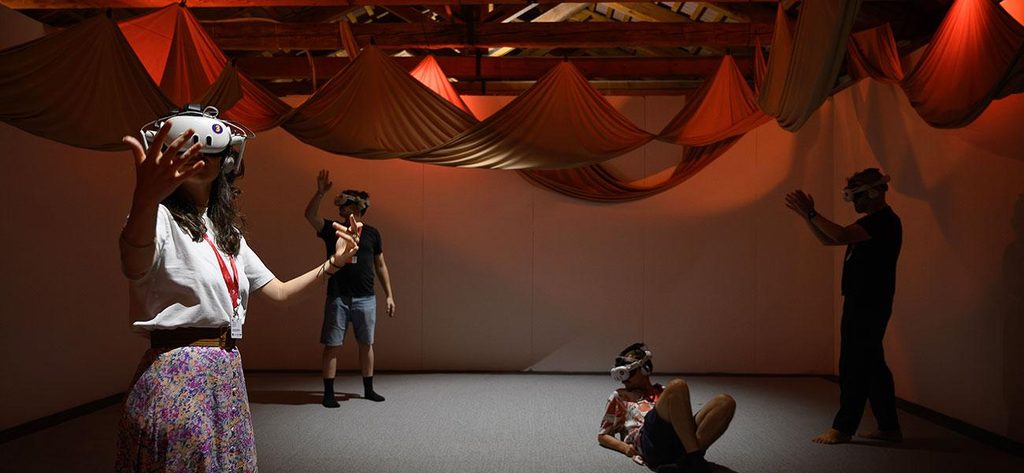
Each year, XR artists, creators, critics, and enthusiasts gather on a small Venice Immersive Island (real name Lazzaretto Vecchio) to celebrate all forms of immersive art and creativity. For the 10th anniversary, Venice Immersive, which is a part of the Venice International Film Festival, showcased 68 projects in total, which include not just VR but also AR, immersive installations, and VRChat worlds.
XR Art Holds Up
XR art continues to serve as an important venue to explore new means of expression. In this sense, the broader slowdown (or “VR winter,” as it is called) did not have as adverse an effect on art as it did on other sectors such as gaming. Judging by the number of projects this year, the opposite might actually be true.
“It’s almost as if less interest from the general media about immersive (because everyone’s focused on AI) is actually a very, very good thing because it helps focus on the content (…) for the sake of the stories that are told, for the emotions that they’re seeking to trigger in us,” said Michel Reilhac, a film producer and co-curator of Venice Immersive, on the Voices of VR podcast with Kent Bye, “if we base our judgment just on the quantity, but also on the incredible quality and diversity (…) VR and immersive in general is far from being done with.“
This statement by Reilhac underscores how XR continues to find its use cases, even when there is no clear monetization plan. In the case of Venice Immersive this is plainly for the sake of art, but in the gaming space, there is currently a surge of VR modders, who, with the help of AI, are converting traditional flatscreen games into VR versions, mostly free of charge. These pockets of enthusiasm-driven XR adoption cannot substitute for commercial activity, but can supplement it, making sure VR usage remains consistent regardless of broader market conditions. Of course, many of the showcased projects do have monetization plans, either through distribution channels, location-based entertainment (LBE) venues, or paid live shows.
Augmented Reality and AI
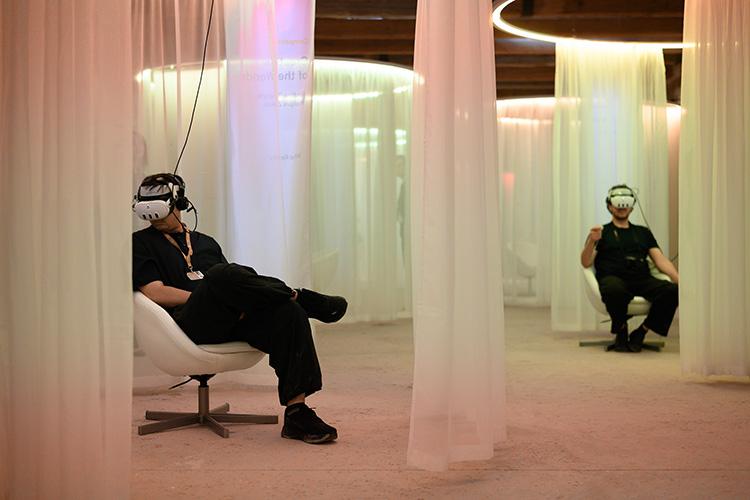
Venice Immersive saw more Augmented Reality installations this year, as the technology gains prominence and becomes more accessible. Two experiences utilized the not-yet-unavailable XREAL AURA glasses. One was a spatial animated story, Nevatars, and the other was Galapagos: Lost Island, narrated by David Attenborough.
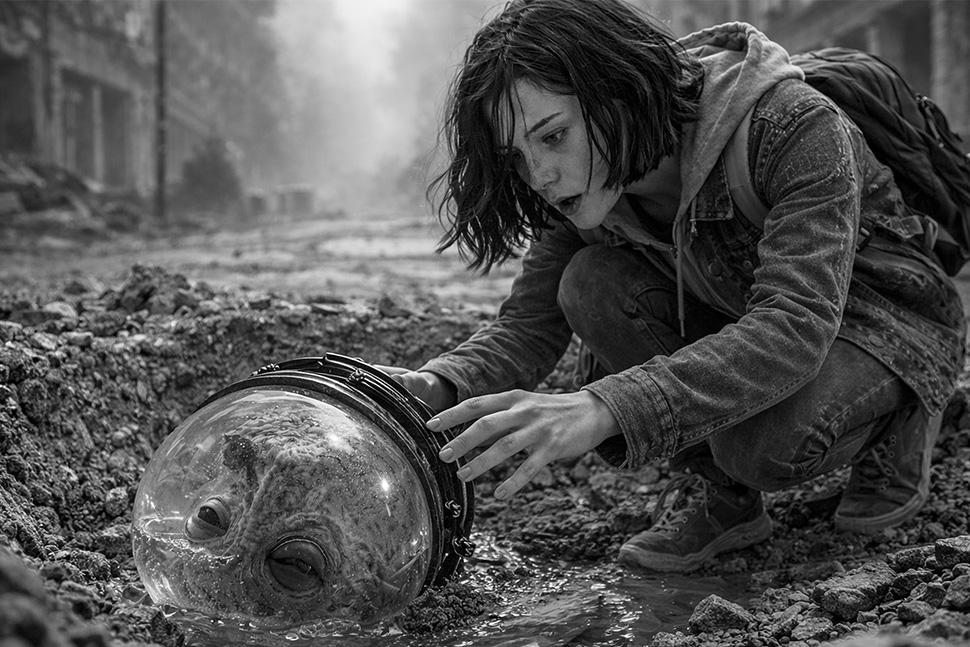
Interestingly, only one experience utilized artificial intelligence as its main component. Titled Octopocalypse, it’s a whimsical sci-fi installation with both the animation and the interactive dialogues done using generative AI. That does not mean other projects did not use AI. In fact, most of them did, but as a way to speed up workflow, coding, editing, and so on. This might be a good indicator of how AI use will progress through its tech cycle, with outward display of AI becoming gradually less popular, and its use shifting instead toward streamlining and behind-the-scenes efficiency.
Overall, XR art has seen some good and bad this year. Felix and Paul Studios, a multiple-award-winning company, has laid off all of its staff and declared bankruptcy. Sundance shuttered its New Frontier section back in 2023, and though some were hoping for some kind of XR-related replacement this year, that has not materialized. At the same time, however, Uncanny Alley, an immersive VRChat theater performance, won an Emmy for Outstanding Emerging Media Program. The backdrop for this year’s Venice Immersive is therefore somewhat complicated but not necessarily bleak.
Those interested in knowing more can check out the following links:
Official Venice Immersive Webpage
Kent Bye’s Voices of VR Podcast with Liz Rosenthal and Michel Reilhac