Meta VR Glasses announced, priced at $1299
 VR Guru·
2 MIN READ
VR Guru·
2 MIN READ

The wait is finally over. At Connect 2026, Meta has officially unveiled its Meta VR Glasses, a compact headset that aims to bring virtual reality closer to the form factor of everyday eyewear. The device, previously codenamed Phoenix, will be priced at $1,299 and is expected to arrive in spring 2027.
VR Headset or VR Glasses?
Form factor is the most impressive part of the reveal. The VR glasses weigh roughly 100 grams. There is also a 300-gram compute puck, connected via an optical tether. This is comparable to XREAL AURA glasses which weigh 95g and also use an external puck, but Meta VR Glasses promise full benefits of spatial computing placing it closer to Apple Vision Pro or Samsung Galaxy XR, which weigh significantly more. The product is therefore positioned as a middle ground between less capable AR glasses and fully enclosed VR headsets. Meta claims battery life of more than three hours of mixed use.
High Resolution, Low FOV
Visually, the Meta VR Glasses are a considerable step up. Dual micro-OLED panels deliver 2,412 x 2,288 pixels per eye at up to 120Hz (37 PPD). The biggest trade-off is field of view, which is 70 degrees horizontal (88 degrees diagonal). This is similar to XREAL AURA field of view but well below the Quest 3’s 110-degree horizontal field of view. Color passthrough is reported to be very high quality, almost indistinguishable from transparent displays.
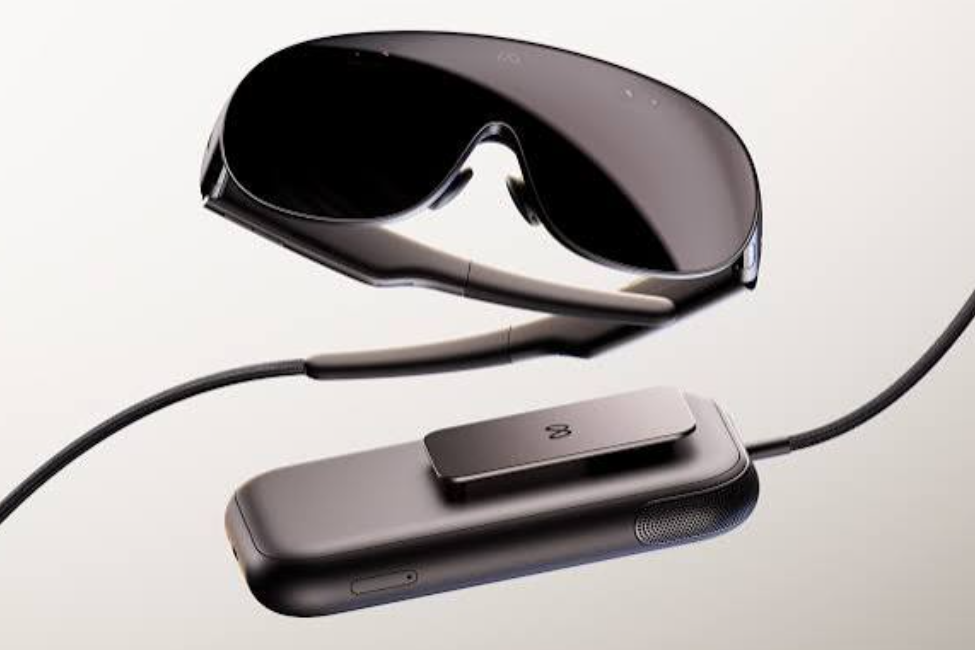
The headset includes eye, face, and hand tracking. UX follows the familiar gaze-and-pinch system pioneered by Apple. Controllers are not included but buyers can pair existing Quest 3 and Quest 3S controllers. Importantly the device runs the same operating system as the Quest 3 and supports the full Quest catalog. Additionally, more than 75 games and apps have been optimized for hand tracking, including a new hand-tracked Beat Saber mode called “Flux”.
Codec Avatars are now Hologram
Meta is also introducing Hologram, a photorealistic avatar system for the Meta VR Glasses. Much like the Personas on Apple Vision Pro, Hologram lets users join video calls as a lifelike avatar that follows their face in real time. Meta says it plans to develop the system into a full 6DoF 3D experience that will become the default user representation on Meta’s VR platform and replace the cartoon-style avatars.

Final Take
Meta VR Glasses are a major achievement in terms of form factor, specs, and price. The continuity with the Quest ecosystem solves the software problem and reassures the Quest community that Meta is not abandoning VR. Price might seem steep but in the current market it is actually competitive. It undercuts Snap Specs, Samsung Galaxy XR, Pico Space Pro, and of course, Apple Vision Pro. The only two XR devices that can compete in this price range are the XREAL AURA and the Steam Frame, both of which target somewhat different user bases.
The launch list covers 25 markets, the UAE and the wider Middle East are not currently among them.